

Why I couldn't finish anything [Part 1]
An essay from 2024 that explores why I couldn't complete any artwork and how I overcame my mental block enough to finally finish something.

Preface
I began writing this essay in March 2024 and only completed it in September of that same year, with the intention of turning it into a video. Since then, the video idea fell to the side and life got in the way. Yet, between then and now, I have managed to complete paintings I could only have dreamed of back in 2024. I believe the change in mentality that led me to be able to do so started here, with this essay, with these observations. For this reason, even though I would phrase things differently now or explore a point in another way, I would like to go ahead and share the essay as it was in September 2024, in the hopes that the thoughts I had then, when I felt I had just figured out the way through my struggles, may help someone who still feels stuck in that moment.
Due to the essay’s length, I decided to divide it into two parts. This first part of the essay covers the why I couldn’t finish anything; the section on how I overcame this issue will be left for the second part, which I will share a week from now.
All the best,
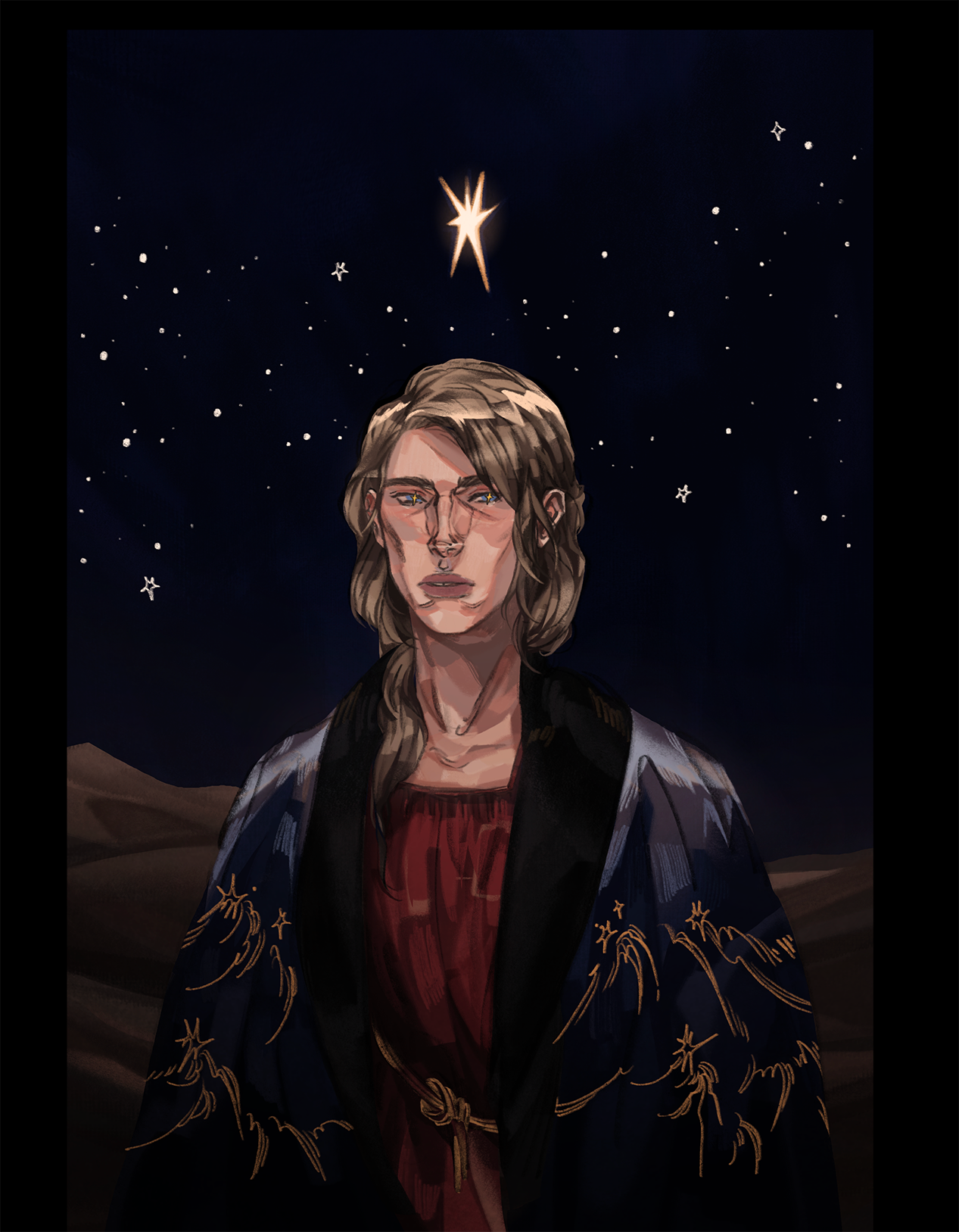
This is the first fully coloured piece I managed to finish in the past 4 years. Before this, I have to go back to May 2020 to find a piece that’s completed to this level of detail and rendering. When I realised this, the biggest question I had was—why?
Why did it take me so long? What was stopping me from completing any artwork?
But, more importantly, what changed?
This [essay] isn’t going to be me giving any practical advice, nor any easily condensed tips on what to do if you can’t finish any drawings. It’s going to be a deep dive into my art process and psychology, to understand why I just couldn’t finish anything. And in doing so, I hope that maybe some element of my story can help someone else figure out what’s blocking them too.
Quite frankly, I don’t feel qualified to give anyone advice – I still struggle with this issue, sometimes. But in short, if you’d like to know what happened for me to overcome it, here is the answer:
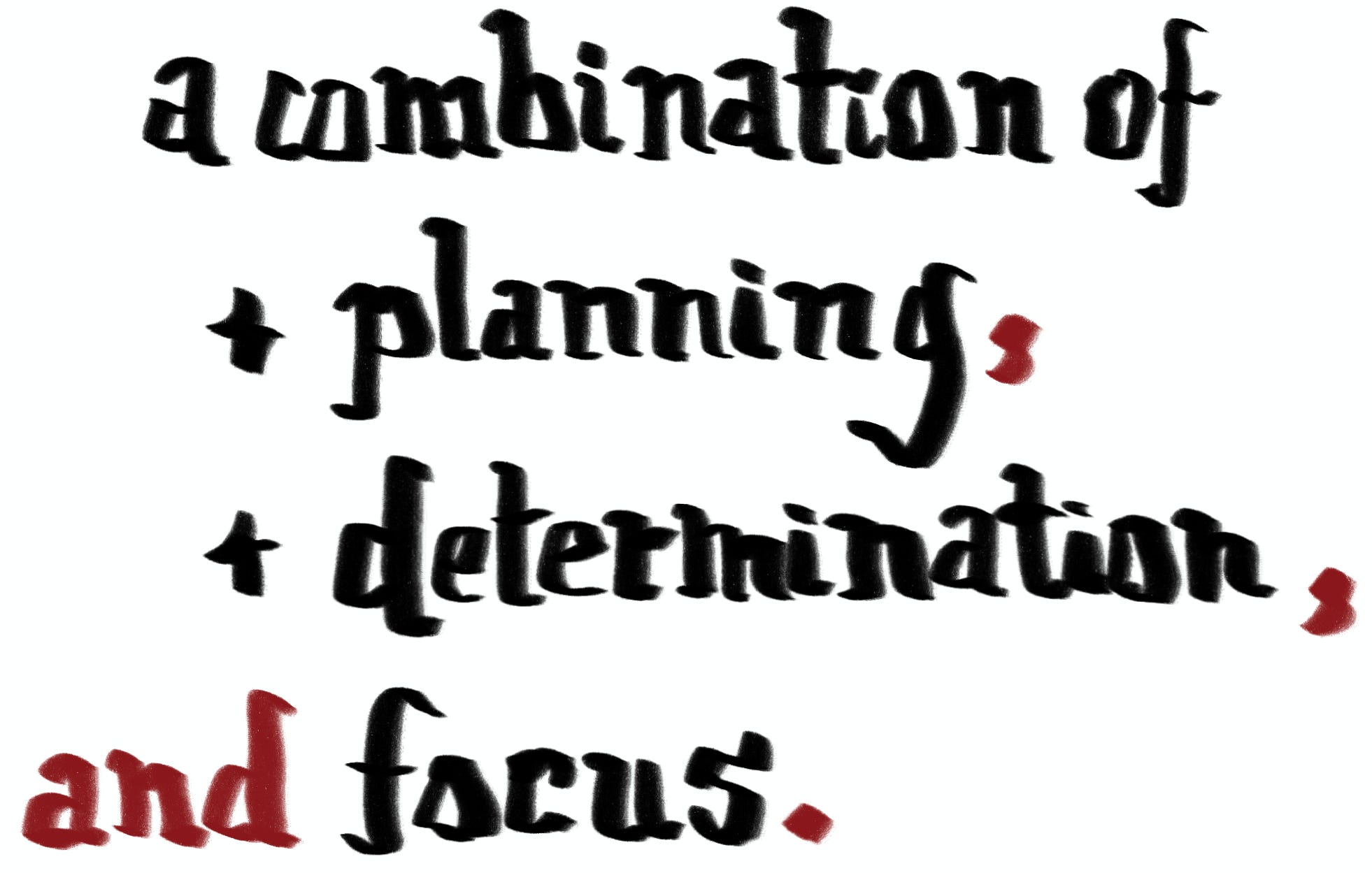
In this form, I admit that the answer doesn’t seem to be very applicable. And that’s because, truthfully, I think that it was by identifying the things that were stopping me to begin with that I managed to overcome the problem enough to finish something. Quick tips or advice couldn’t necessarily do that for me – only I could.
But before I delve into that, let me give you some context.
My inability to complete things is a problem that I’ve had for a long time and that affects all creative areas of my life.
Be it the piano piece that I started learning five years ago and still know only 1/3rd of it, or the writing project that I’ve only managed to write some disconnected scraps for, despite all the years of research and thought.
I get an idea, I commit to it for some time, then I hit a road block and I either settle to leave it as it is and move onto something else, or I hope that a me in the future will manage to finish it.
Problem is, the days pass, I’m still me, and the things I want to do never get fully done.
And at some point this year I just said to myself “That’s it. I’m tired. I’m tired of never being able to finish anything, and having nothing to show.” Because considering all the time I’ve spent doing art, how is it that I only have a handful of pieces that are truly complete?
So I sat myself down, I did some digging, and realised what the actual problem was. And to my misfortune it wasn’t only one, but three: perfectionism, my sense of self, and the way my fear interacts with the allure of possibility.
The need to achieve perfection in my creative work feels inescapable – most times, at least. I’ve always been the kind of person who either does something and has to do that something well, or shouldn’t be doing that thing at all. This is to say that when I commit to something, I feel it’s my responsibility to ensure it turns out well and give it the attention it requires, or else why am I even putting the time in it in the first place?
The problem though arises when that sentiment is taken too far, and when having to do something well suddenly transforms into expecting to achieve something impossible.
When it comes to art in specific, I usually have a vision for what I want a piece or a drawing to look like – and it is important for me to achieve that vision, in one way or another, for me to consider the piece a success.
If I am drawing a specific character of mine, though, this vision becomes even more rigid, as I have a strong sense of how they look. And while being able to see them so distinctly in my mind is a blessing in many ways, with more rigidity comes more possibility for disappointment and failure, as the parameters in which I can achieve that vision become smaller.
And this is why, if you were to look at all the artwork I have ever done, you’d see an overwhelming amount of sketches where a person’s face is incredibly detailed and rendered, while the rest of the piece is just guiding lines.
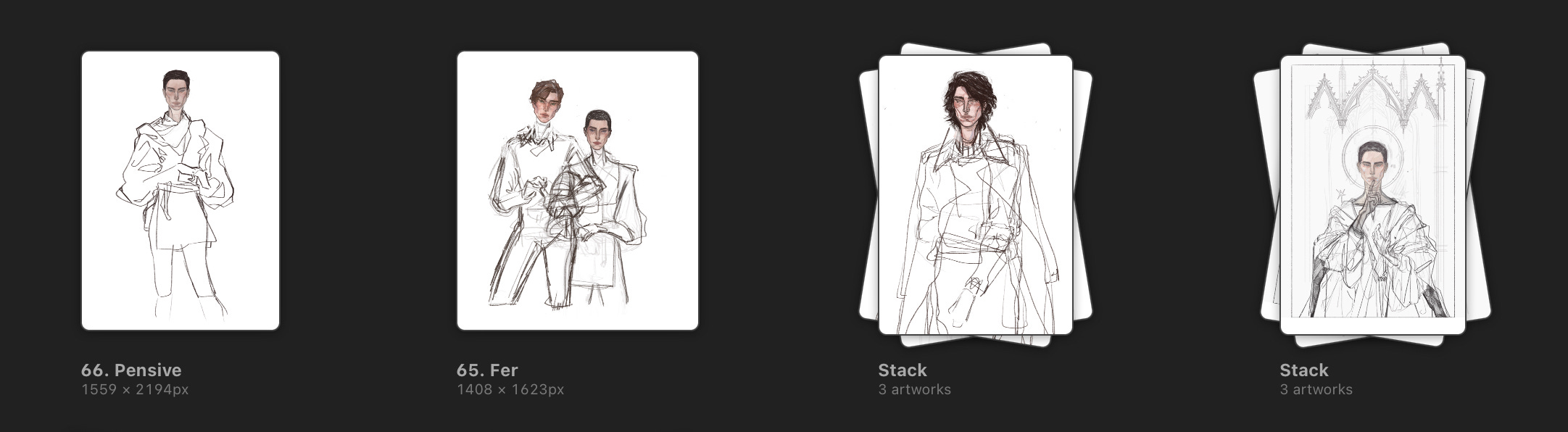
My characters had to be perfect, and I’d feel so frustrated if I couldn’t recreate in some way the image I had of them in my head. So I’d spend an inordinate amount of hours trying to get someone’s face just right that by the time I was done with it, all the mental energy I had to give for that specific piece had been spent. I didn’t want to work on it anymore, and hey, I got the face right, so what else was there to do?
Rinse and repeat, for 4 years.
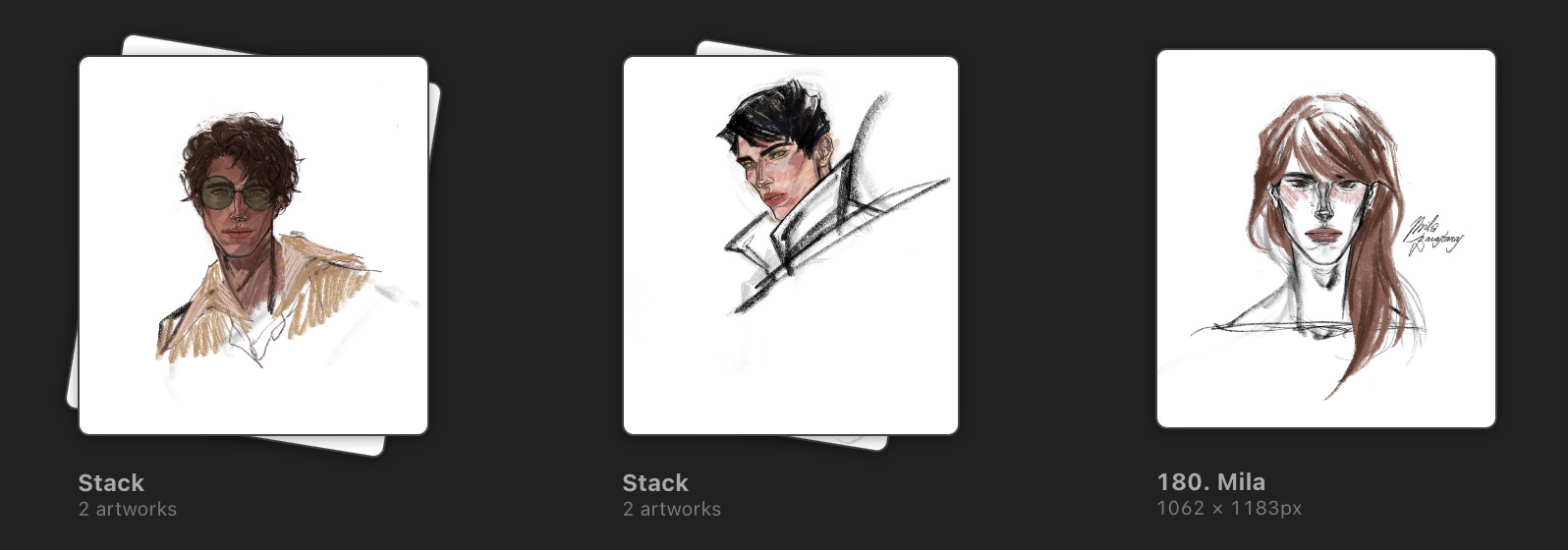
But the problem was, I didn’t want to be stuck drawing floating heads forever. There were more complex, atmospheric paintings I wanted to create, as well as scenes from my stories.
And as I pondered more on the kind of art I wanted to make, I came to realize that it was the very kind of art that I was afraid of making.
Because—where would I even start with drawing the scenes from my stories? How could I ever recreate faithfully the visions I had of them in my head? There were so many things – emotionally, atmospherically, subtextually – that had to be communicated. And did I even have the skill to do any of that right? To do any of my characters justice?
And as the parameters in which my vision could be achieved narrowed, the expectations that came with my perfectionism started to strangle me.
At this point, it became so easy to see an unfinished piece with potential as so much less scary than a finished one that had completely not met any of my expectations.
It hurt less to see, at least.
It hurt less than realizing I wasn’t the kind of person who could do those things.
The more time you spend doing something, the less you feel you have an excuse to not be good at it. At least that’s how I feel for myself.
I’ve been drawing since I was a child, and drawing, for a long time, felt like the activity that defined me as a person. Others knew me mostly as the kid that was good at art, and any valuable quality that they perceived in me always seemed to be linked to my ability to draw.
This considered, it becomes very difficult to come to terms with the fact that now, in my late 20s, I am nowhere near the skill level of some artists around my age, or people 8 years my junior, or others that have been drawing for less time than I have.
Because—what excuse did I have? If I had spent so much time drawing, shouldn’t I be good at it? Shouldn’t I be able to make all those fantastically rendered atmospheric pieces, or compositionally interesting paintings?
I don’t know if I ever fully believed that I could – I had little evidence to back those thoughts to begin with. But I also couldn’t deal with getting my pieces to the point where the very opposite evidence – the idea that no, in fact, I clearly could not do any that – would stare at me unequivocally right in front of my face.
In not completing anything, I didn’t have to face the reality of my skills, my lack of discipline or determination, or the fact that despite all my years of making art, I hadn’t actually been very serious about it.
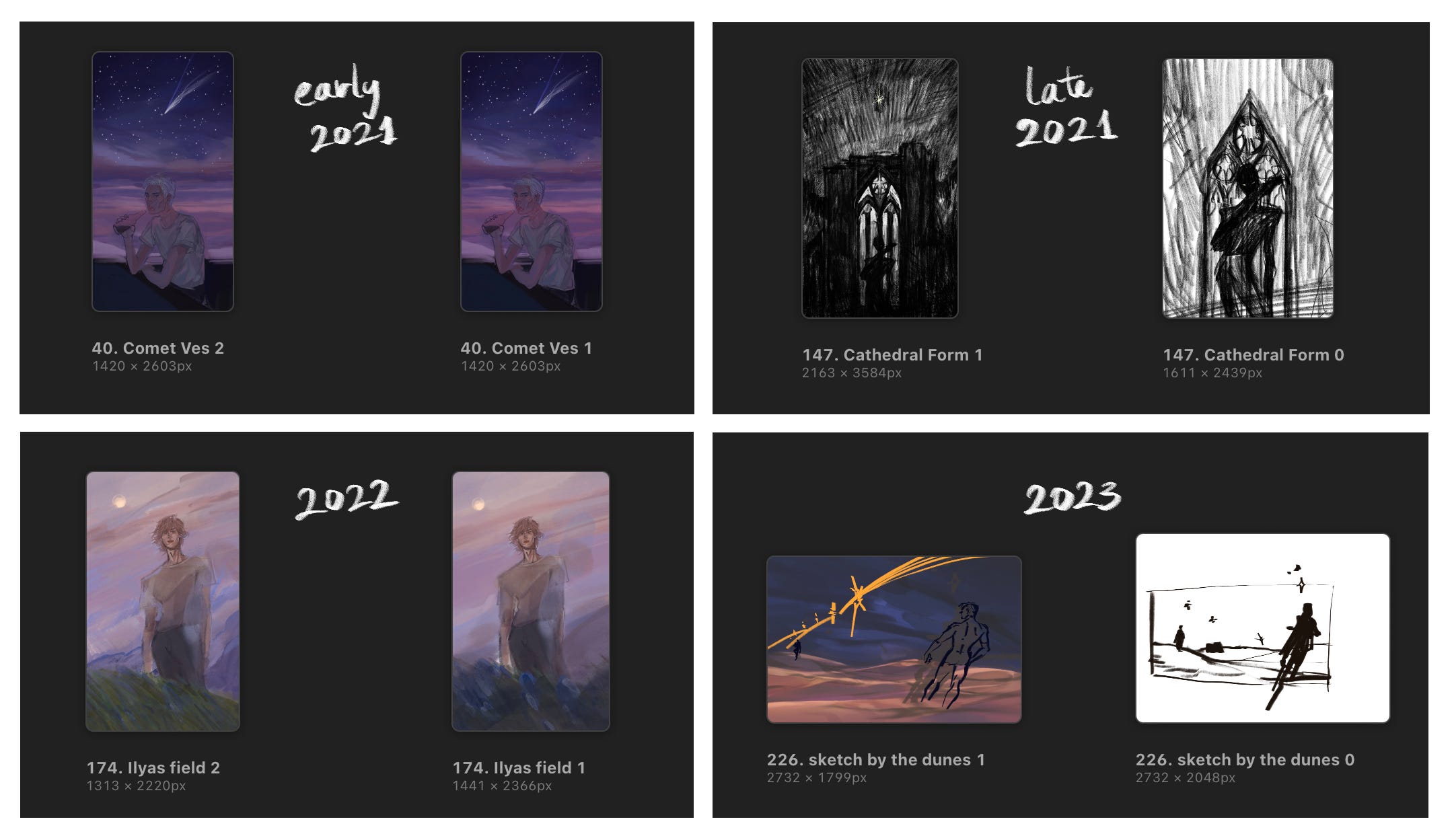
So even in this case, it became so much easier to leave everything unfinished – lingering in potential. I basked in the pool of possibility that the blanks in my works granted, and I got too comfortable in believing that if I wanted to, I could do those kinds of pieces; that if I wanted to, I could be that good. Yet, despite the want being there, nothing ever materialised for me to push myself to create to that level. And deep down, I knew that I wasn’t as good as I should’ve been.
Fundamentally, I can now say that I was afraid – afraid of seeing that the person I wanted to be, that I thought I would’ve been by this time, was actually very different from the person that I was—am. And that the years I had spent making art I hadn’t really spent as well as I could’ve.
There’s a point I inevitably reach with every drawing where the sketch or the basic composition is done, and the potential of how the piece could become is presented in front of me. Here, I’m faced with what it is I can do or will likely do to finish the piece, and what it is that I would like the piece to look like by the end. These two things rarely match in execution, but they do share a common problem: having to surmount the sacredness of the initial sketch.
I’ve seen many artists, especially traditional artists or digital artists that work on a single layer, paint over so swiftly their initial lines. No matter how beautiful or precise their lineart or guiding sketch, they manage to move on filling it without looking back, trusting the process and ultimately achieving a completed coloured piece.
Their ease and confidence is one I am working on building, as the fear of ruining what I’ve already done stalls me as much as my other problems when I draw.
Not only is the prospect of making a mistake paralysing (I managed to draw the eyes well this time, but what guarantee do I have that it’ll happen again??), but also the idea of everything the piece could potentially be (I could paint him with watercolours or gouache, or maybe I’ll set the scene at dawn instead of dusk…?). And when I’ve already spent a considerable amount of time on the preliminary sketch, my risk aversion increases – I don’t want my efforts to go to waste and to ruin what I’ve done with colour.
I admit, I face this problem the most when drawing people – getting their features to what feels just right already takes so much time. And when your perfectionism is off the charts like mine where a single pixel makes a world of difference, adding colour feels like a gamble. What assurance do I have that I’ll be able to preserve that perfect slant of their eyes?
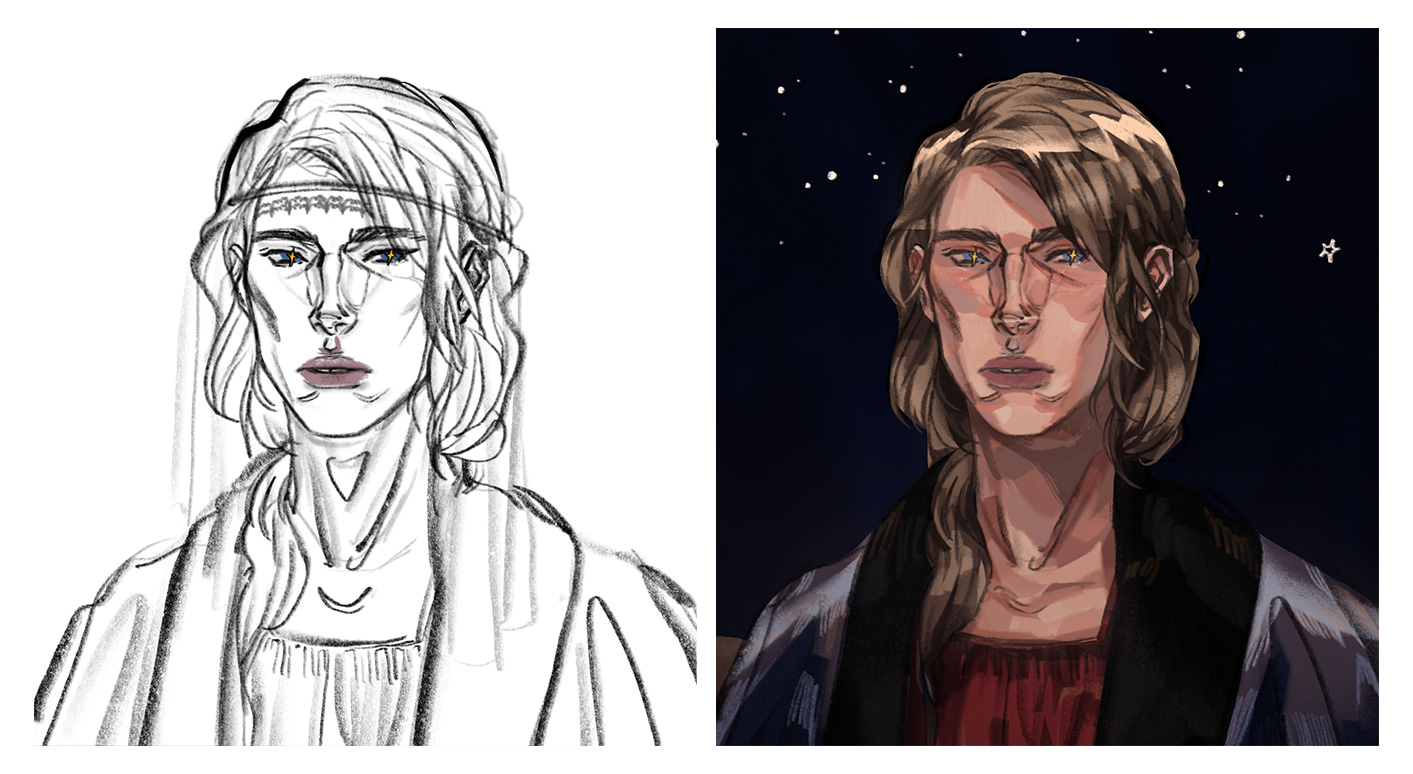
Initially, I thought to make fear and possibility separate sections, but realised mid-writing this that they come hand in hand. Fear is my caution and perfectionism speaking, while Possibility is the want to have everything fulfilled by a single drawing. Neither can be, but they do feed each other, often leaving me in a pit of indecision where not making a choice feels safer for the integrity of the piece than making one at all.
Now, considering the problems I’ve just listed, how is it that I even managed to finish a fully coloured piece? To this, I return to my previous answer: a combination of planning, determination, and focus.
But [next] time, I will expand on it and explain to you exactly what I mean...